Why This Beetle’s Bedroom Antics Matter: Introductory Summary
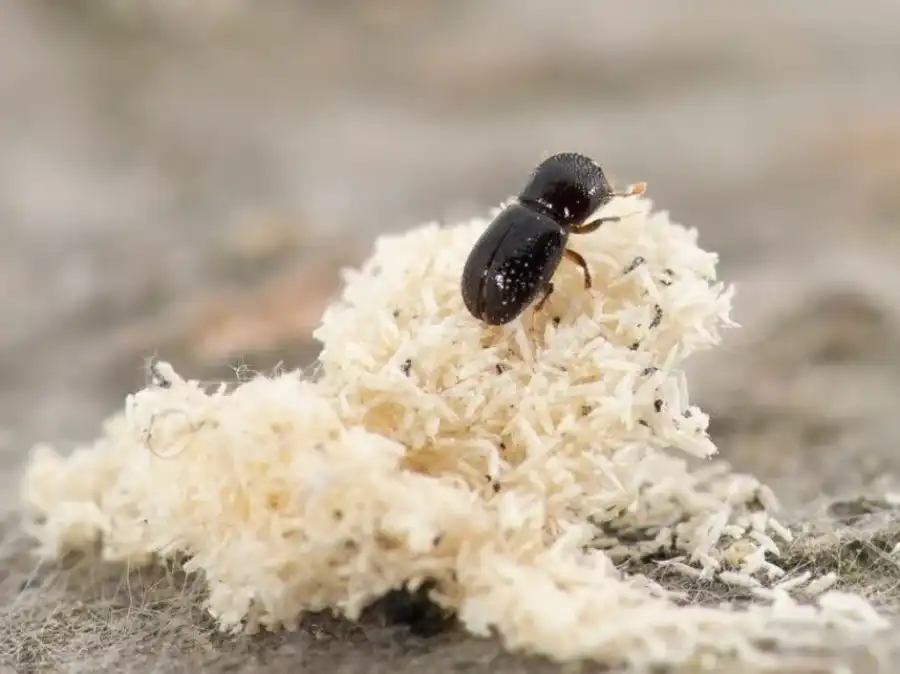
If you thought the polyphagous shot hole borer was just another bug munching on trees, think again. This little terror—barely the size of a sesame seed—has a love life so wild it’s practically written into its name. “Fornicatus,” part of its scientific title, Euwallacea fornicatus, comes from the Latin word for “fornicator,” Let me tell you, this beetle lives up to the hype. It’s not just tunnelling into trees and spreading killer fungi that make it a headache from California’s avocado groves to South Africa’s city parks. Nope, it’s the beetle’s downright scandalous reproductive habits that turn it into an invasive superstar.
In this blog, we’re zooming in on how this tiny critter’s mating game—especially the queen’s knack for getting cosy with her own offspring—helps it conquer the world, one tree at a time. Buckle up for a wild ride into beetle romance!
The queen’s knack for getting cozy with her own offspring—helps it conquer the world.
The Beetle’s Naughty Nickname: A Clue in Plain Sight
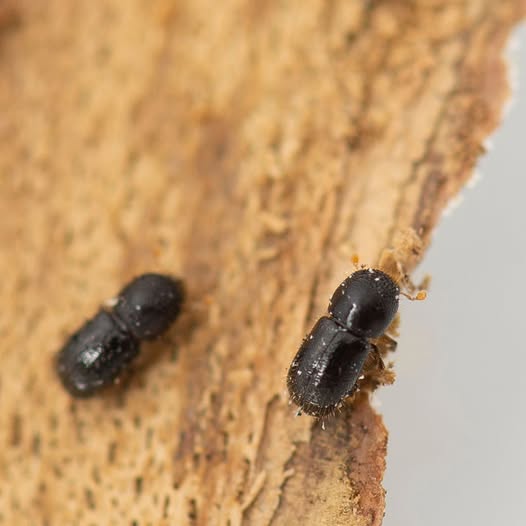
Let’s start with the name. When scientists slapped Euwallacea fornicatus on this beetle, they weren’t just being fancy—they were dropping a hint. “Fornicatus” screams “fornicator,” and it’s no accident. This isn’t some dry Latin pun; it’s a neon sign pointing to the beetle’s bedroom behavior. Unlike most critters that need to find a mate out in the wild, this beetle keeps it all in the family—literally. And that’s the key to why it’s popping up everywhere, from Perth to Los Angeles, faster than you can say “bug spray.” Its reproductive system is a lean, mean, invading machine, and it all starts with one ambitious female.
Meet the Queen: One Beetle to Rule Them All
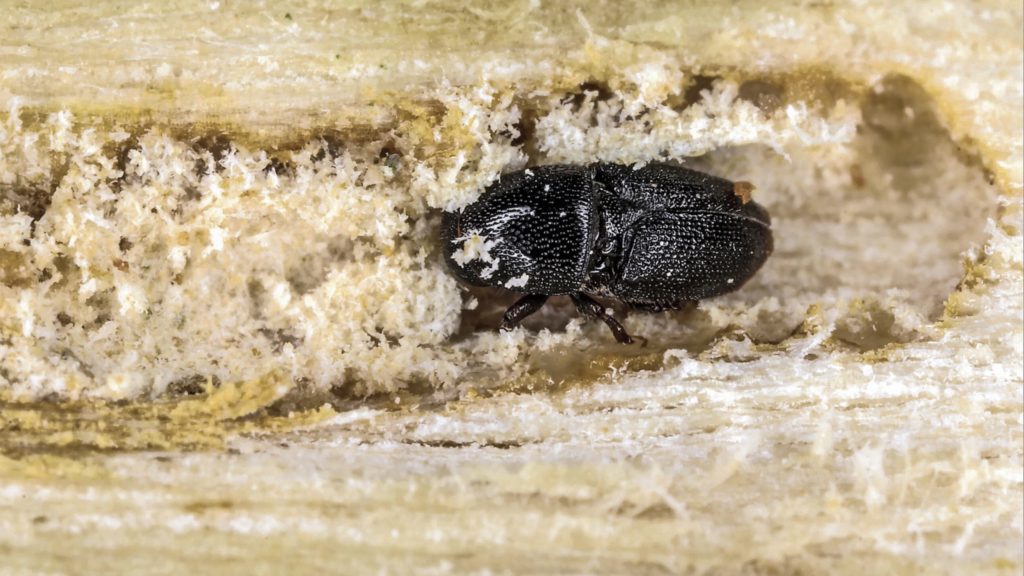
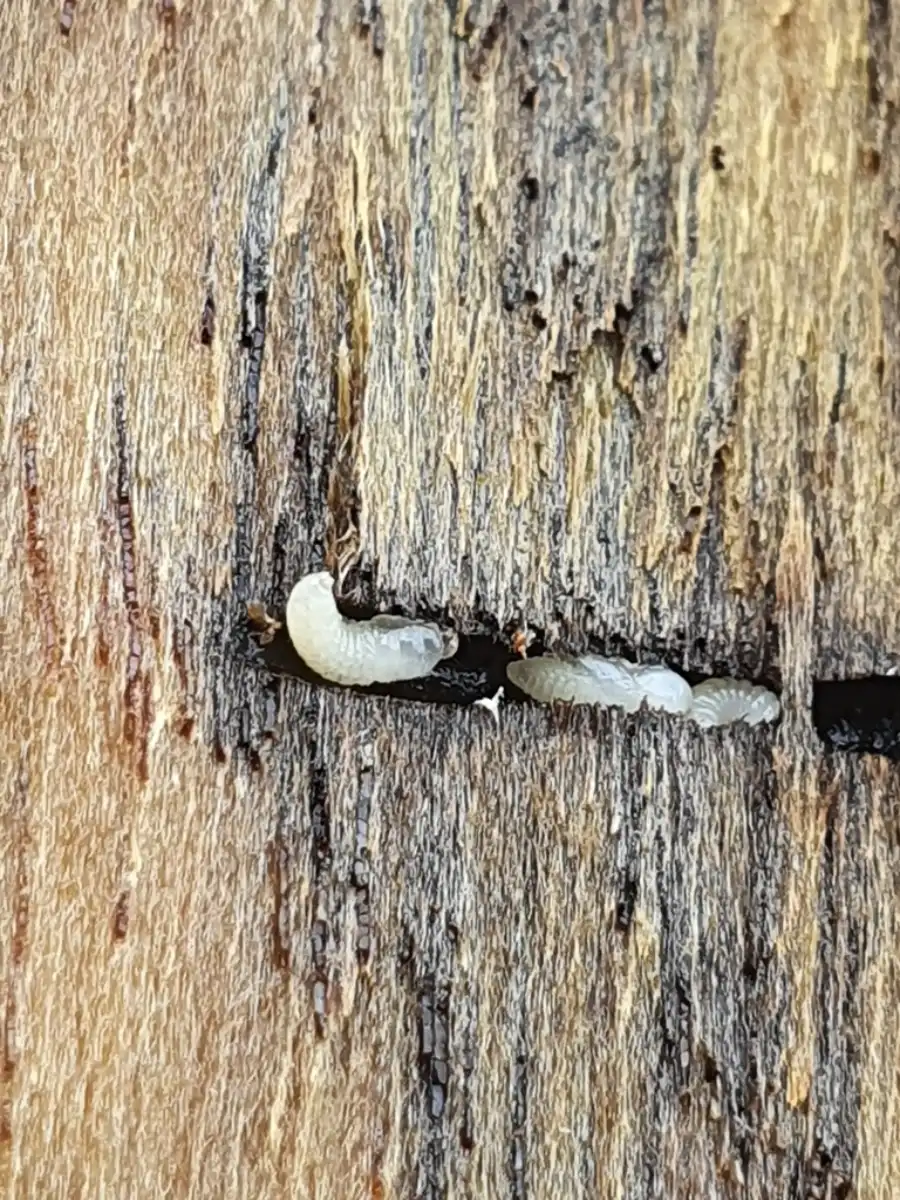
Picture this: a lone female polyphagous shot hole borer lands on a tree—say, a healthy maple or an avocado in your backyard. She’s not waiting for a handsome stranger to sweep her off her wings. Nope, she’s a one-woman show, and she’s got a plan. She bores into the trunk, carving out a cozy network of tunnels, and gets to work laying eggs. Here’s where it gets weird: those first eggs? They’re unfertilized, and they hatch into males—her sons.
Yep, you read that right. This queen doesn’t need a king to kick things off; she’s got a built-in system to make her own mates. Scientists call this “arrhenotoky,” but let’s just call it nature’s wild card. Within weeks, she’s got a handful of tiny male beetles scurrying around her tunnels, ready to, well, get busy.
Family Ties: The Incest That Fuels an Invasion
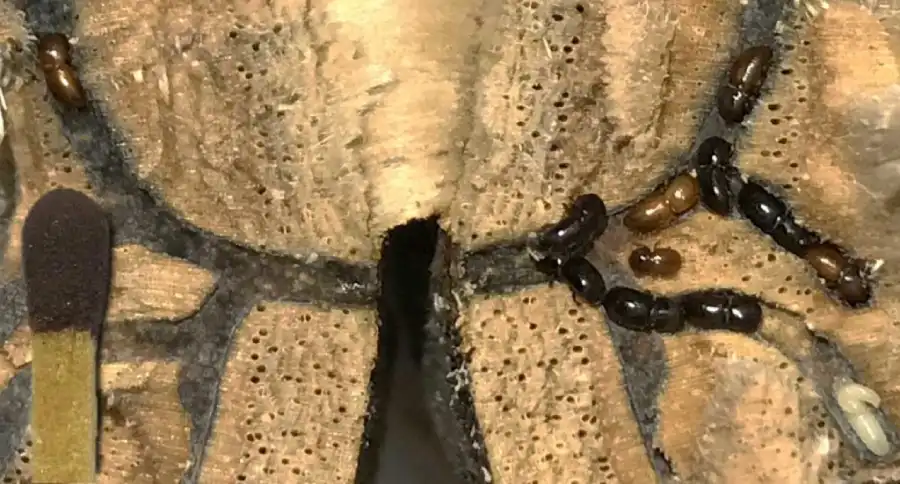
Now, hold onto your hat because this is where the “fornicator” part really shines. Once those male offspring grow up—tiny, wingless guys who never leave the tunnel—the queen mates with them. That’s right, she hooks up with her own sons. It sounds like a plot twist from a soap opera, but for this beetle, it’s the ticket to success. After this family fling, she starts laying fertilized eggs, and those hatch into females—daughters who’ll eventually fly off to start their own colonies.
This brother-sister, mother-son mashup means one beetle can spark an entire population explosion without ever needing to swipe right on another bug.
This brother-sister, mother-son mashup means one beetle can spark an entire population explosion without ever needing to swipe right on another bug. In just 22 days under the right conditions, a single queen can churn out dozens of daughters—up to 57 in six weeks, studies say—each ready to spread the love (and the fungus) to a new tree.
Why This Bedroom Drama Works So Well
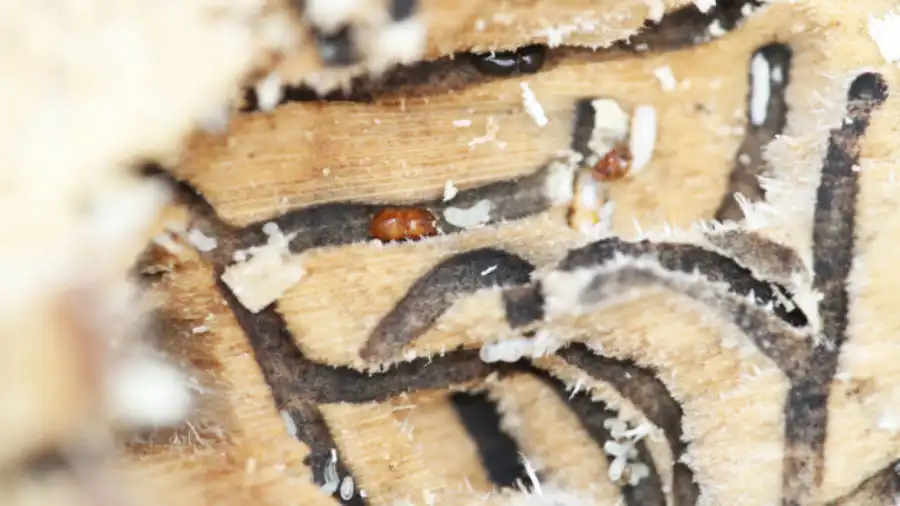
So, why does this creepy love story make the polyphagous shot hole borer such a champ at invading? It’s all about speed and simplicity. Most insects need to find mates, court them, and hope for the best. Not this beetle. One female, crash-landing on a tree via a shipping crate or a gust of wind, is all it takes to set up shop. She doesn’t waste time searching for a partner—her sons are right there, ready to roll. This cuts out the middleman and lets her colony grow fast.
A single queen can produce an army of female offspring in just a couple of months,
A study found that a single queen can produce an army of female offspring in just a couple of months, each carrying that deadly Fusarium euwallaceae fungus in little pockets on her body. Those daughters fly off—sometimes just 40 meters, sometimes farther with a good breeze—and the cycle repeats. Before you know it, a whole neighborhood’s worth of trees is under siege.
Learn More
View our YouTube Channel and learn more about the Polyphagous Shot-Hole Borer
Strength in Numbers: The Female Takeover
Here’s another kicker: this beetle’s family tree is heavily skewed toward the ladies. For every 100 offspring, only about 7 or 8 are males. The rest? Females, ready to jet out and conquer new territory. The males, bless their hearts, don’t even have wings—they’re stuck in the tunnels, mating with mom or their sisters and then calling it a life. This female-heavy ratio is a goldmine for invasion. More females mean more new colonies, and since each one can start her own brood with her sons, the beetle’s spread is like a wildfire with unlimited matches. Add in the fact that it hits over 200 tree species—healthy or not—and you’ve got a pest that’s basically unstoppable once it gets a foothold.
From Southeast Asia to Your Backyard: A Love Story Gone Global
Native to Southeast Asia, this beetle’s been hitching rides on ships, crates, and firewood, landing in places like California, Israel, and South Africa. Its reproductive mojo is why it’s thriving far from home. A single female stowing away in a wooden pallet can start a whole new outbreak—no backup needed. Climate change and global trade just sweeten the deal, giving it more chances to hop borders. And that fungus it farms? It’s the perfect partner, clogging tree veins while the beetle’s babies feast. Together, they’re a double whammy, but it’s the beetle’s “mass fornicator” lifestyle that keeps the party going strong.
Wrapping Up: The Real Star of the Show
So, next time you hear about the polyphagous shot hole borer, don’t just picture a bug drilling holes. Think of it as a tiny Casanova, turning trees into love nests and family factories. Its name, fornicatus, isn’t just a quirky label—it’s a badge of honor for a beetle that’s mastered the art of invasion through sheer reproductive audacity. The queen’s ability to mate with her sons isn’t just weird—it’s brilliant. It’s why this pest is rewriting the rulebook on ambrosia beetles, turning a solo act into a global takeover. The fungus might kill the trees, but it’s the beetle’s bedroom antics that keep the chaos coming.
At ConSarca, our goal is to break down the complex story of the polyphagous shot hole borer into bite-sized, easy-to-grasp pieces. We’re here to help you see past the beetle’s tiny tunnels and understand the real threat—the fungus it carries. More than that, we want to arm you with the know-how to spot an infestation early, shield your healthy trees from this sneaky duo, and even nurse infected ones back to health without reaching for the chainsaw. Whether you’re a homeowner, a gardener, or just someone who loves trees, we’re your go-to resource for tackling this pest the smart way—because knowing the full story is the first step to fighting back.