The real killer behind the decline of many beautiful English Oaks in Stellenbosch and surrounding areas isn’t the insect you’ve likely heard about—it’s a fungus.
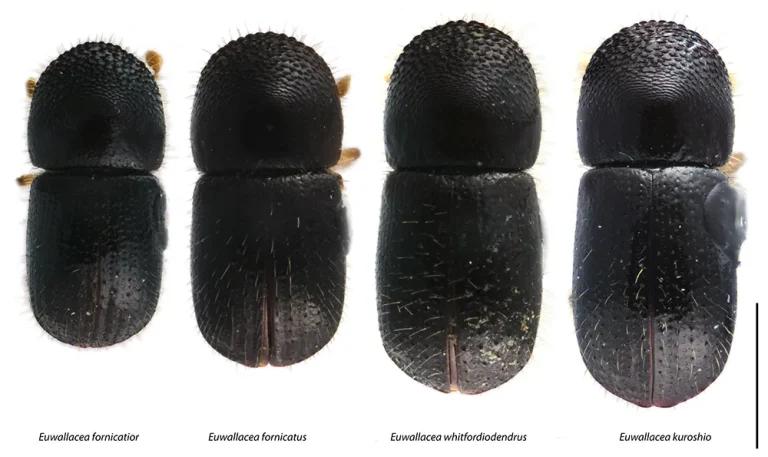
You’ve probably been told that the Polyphagous Shot Hole Borer (PSHB, also known simply as shot hole borer or by its abbreviation PSHB) is destroying trees. While the tiny beetle plays a key role, it isn’t the direct cause of death. The true culprit is its symbiotic partner: the fungus Fusarium euwallaceae (commonly referred to as Fusarium).
Learn More
View our YouTube Channel and learn more about the Polyphagous Shot-Hole Borer
This ambrosia beetle, native to Southeast Asia and invasive in South Africa since around 2017, bores into the tree’s wood to create galleries for its eggs and larvae. It depends entirely on the fungus as a food source—the beetle “farms” Fusarium by carrying it in specialized organs and inoculating the tunnels it excavates. As the beetle multiplies rapidly and spreads within the tree (and to new ones), the fungus proliferates too.
Here’s the critical part: in highly susceptible trees like the English Oak (Quercus robur), the fungus grows aggressively and invades the tree’s vascular system—the “highways” that transport water and nutrients from the roots to the leaves. Fusarium effectively clogs and blocks these pathways, starving and suffocating the tree from within. Symptoms appear gradually: leaves turn brown, branches die back, and the canopy thins as the tree is deprived of essentials for survival.

Even if the beetles eventually leave or are controlled, the fungus often remains behind, continuing its destructive work. The beetle is the vector and enabler, but the fungus is the primary pathogen responsible for tree mortality.
The fungus is the primary pathogen responsible for tree mortality.
English Oaks are among the most vulnerable in South Africa, especially older or stressed trees (e.g., from drought or age), where successful beetle reproduction and fungal spread lead to almost inevitable death. Other highly susceptible species include box elder maples, London planes, and various maples, but English Oaks have been particularly hard-hit in areas like Stellenbosch, George, and Knysna.
The Ultimate Killer Partnership
Understanding this “toxic romance” between the PSHB and Fusarium shifts the focus: effective management and potential tree-saving strategies must prioritize combating the fungus and limiting its spread, rather than solely targeting the beetle. Early detection, avoiding movement of infested wood, and professional assessment are key steps for tree owners.
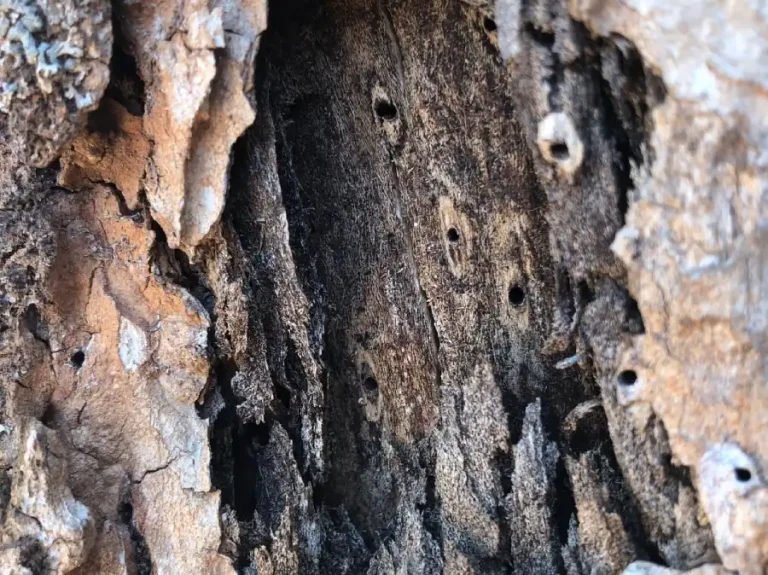
The next time you see signs of PSHB infestation—tiny entry holes, sawdust-like frass, or staining—remember: the beetle opens the door, but the fungus delivers the fatal blow. By educating ourselves on this dynamic, we can better protect South Africa’s urban and heritage trees from this devastating partnership.
Summary: It’s the Fungus, Not the Beetle
At ConSarca, our goal is to break down the complex story of the polyphagous shot hole borer into bite-sized, easy-to-grasp pieces. We’re here to help you see past the beetle’s tiny tunnels and understand the real threat—the fungus it carries. More than that, we want to arm you with the know-how to spot an infestation early, shield your healthy trees from this sneaky duo, and even nurse infected ones back to health without reaching for the chainsaw. Whether you’re a homeowner, a gardener, or just someone who loves trees, we’re your go-to resource for tackling this pest the smart way—because knowing the full story is the first step to fighting back.