Introductory Summary: Meet the Family Rumble
Learn More
View our YouTube Channel and learn more about the Polyphagous Shot-Hole Borer
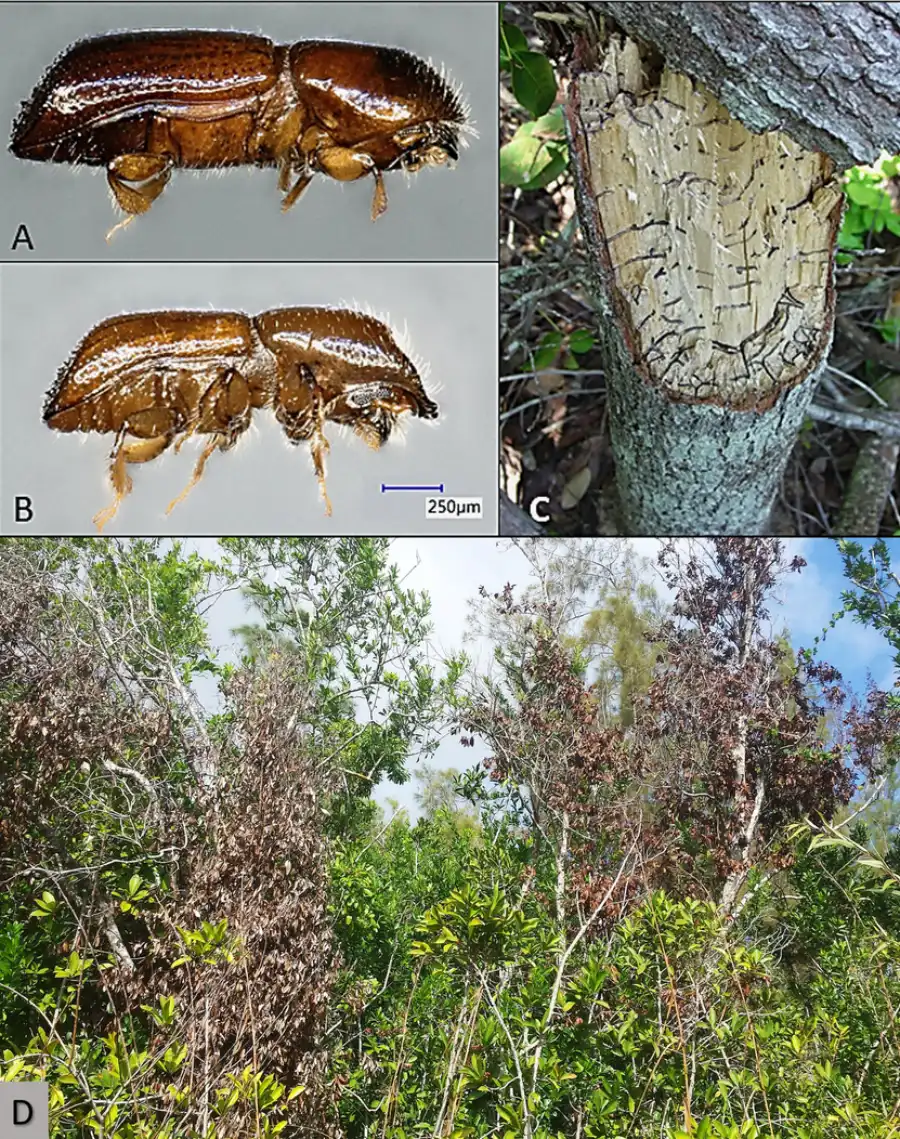
You’ve stuck with us through six wild tales about the polyphagous shot hole borer—that sesame-seed-sized terror with a fungal sidekick, a scandalous love life, and a knack for crashing trees from California to Cape Town. We’ve unpacked its Fusarium euwallaceae partner, its “fornicatus” mating hustle, its “polyphagous” buffet, its global road trip, and how we humans handed it the keys to chaos. But there’s one last question: how does this beetle stack up against its relatives? It’s an ambrosia beetle, sure, but it’s not your average family member.
In this grand finale, we’re throwing it into the ring with its cousins—think redbay ambrosia beetles, coffee borers, even termites for kicks—to see why it’s the champ of chaos. Picture a beetle showdown, gloves off, and let’s find out what makes our shot hole borer the black sheep that keeps winning!
The Ambrosia Beetle Clan: Same Game, Different Playbook
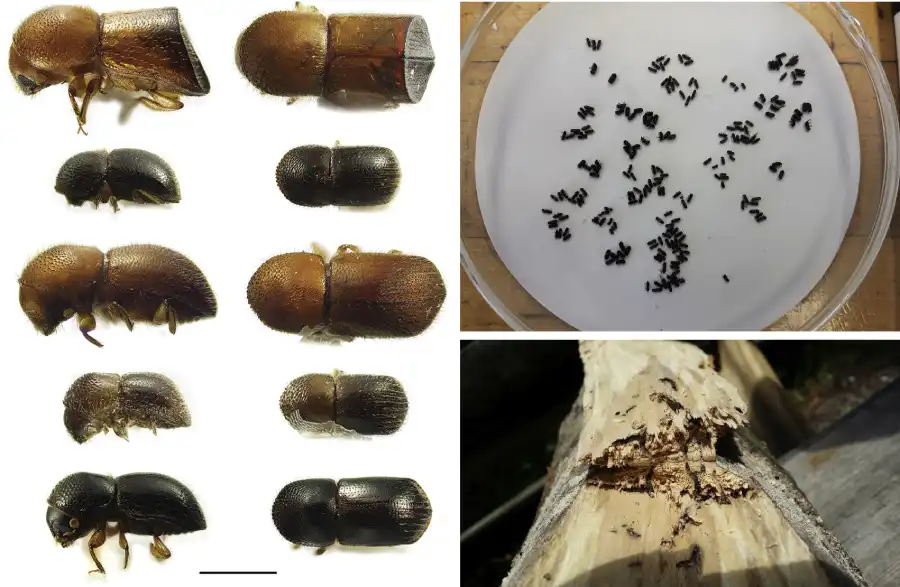
First, meet the family: ambrosia beetles, a quirky crew in the Scolytinae subfamily. Like our shot hole borer (Euwallacea fornicatus), they don’t eat wood—they farm fungi in tree tunnels, munching on the crop. Picture them as tiny mushroom growers, each with a fungal pal stashed in mycangia pockets. The polyphagous shot hole borer’s got Fusarium euwallaceae, but its cousins have their own fungal buddies—Raffaelea species, usually. They all bore in, plant their spores, and snack on the harvest. So far, so similar, right? But here’s where our beetle flexes—it’s not just playing the game; it’s rewriting the playbook.
It’s not just playing the game; it’s rewriting the playbook.
Take the redbay ambrosia beetle (Xyleborus glabratus), a Southeast US pest since 2002. It’s got a fungal partner too—Raffaelea lauricola—and it’s a tree-killer, wiping out redbay trees and laurels in a flash. Sounds familiar, but it’s a one-trick pony. It sticks to laurel family trees—maybe a dozen species tops—while our borer hits 200+, from avocados to oaks. Redbay’s picky; polyphagous is the kid who’ll raid any fridge. In South Carolina, redbay turned forests into graveyards by 2010, but it didn’t jump to maples or figs. Our beetle? It’d crash that party and bring fungal dip.
Picky Eaters vs. Buffet Bingers
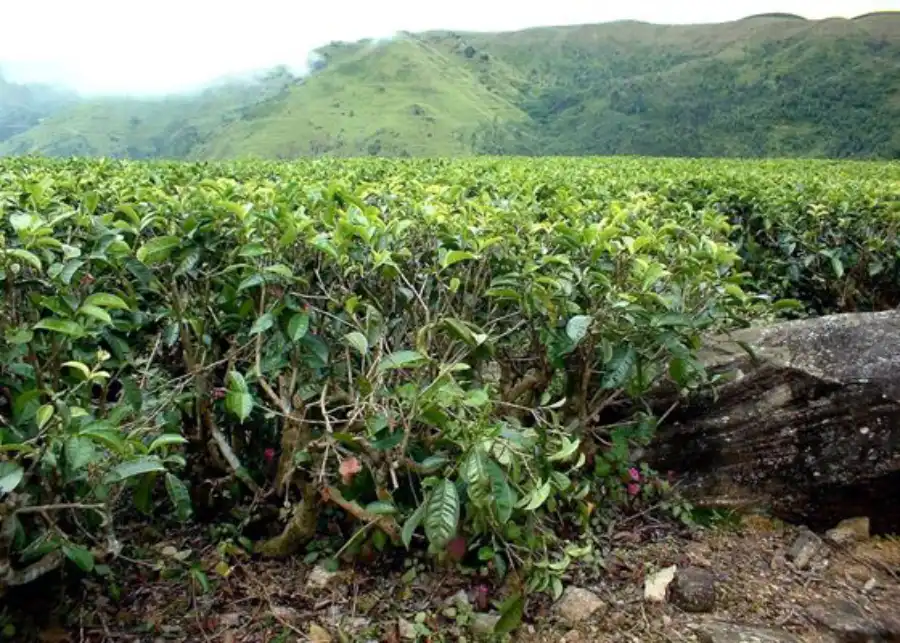
That “polyphagous” tag is the first big win. Most ambrosia beetles are fussy—specialists with a short menu. The tea shot hole borer (Euwallacea perbrevis), a close cousin, sticks to tea plants in Sri Lanka and India. It’s got its own Fusarium fungus, but it’s not gatecrashing orchards or city parks—just tea estates, where it’s a pain for growers. Our borer, though? It’s the ultimate buffet binger. In South Africa, it’s hit Virgilia natives, urban oaks, even tough carobs in Israel—over 100 species there alone, per FABI (2023). It’s not loyal; it’s opportunistic, and that’s why it’s everywhere while tea borers stay in their lane.
It’s a jack-of-all-trades, crashing ecosystems and economies alike.
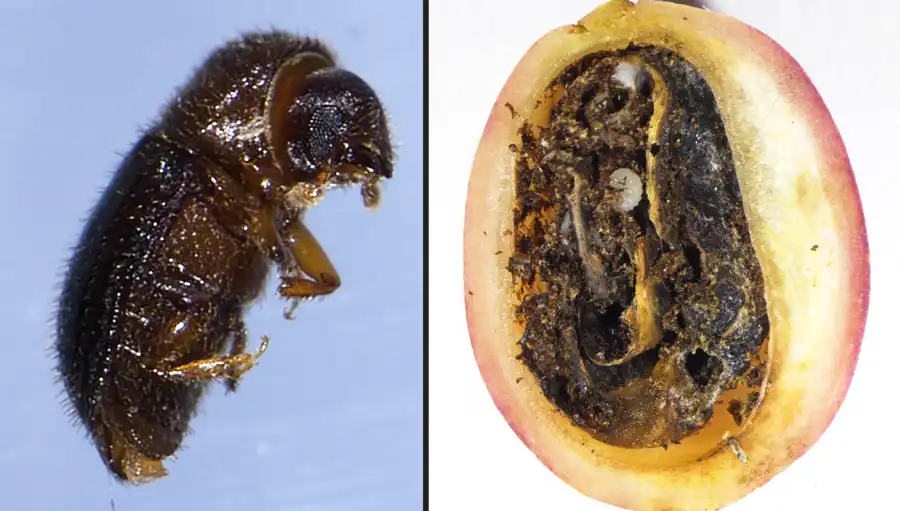
Then there’s the coffee berry borer (Hypothenemus hampei), another Scolytinae relative, but not an ambrosia beetle. It skips the fungal farming and eats coffee beans—straight-up munching, no middleman. It’s a global pest too, costing growers $500 million yearly, but it’s a coffee snob—won’t touch an oak or avocado. Our borer’s polyphagous hustle means it’s not tied to one crop—it’s a jack-of-all-trades, crashing ecosystems and economies alike. Example: California’s avocado losses hit $40 million by 2015 (UC Riverside), while Joburg’s urban trees face a R275 billion tab. One-trick beetles can’t match that chaos.
Breeding Bonanza: Fornicatus Takes the Crown
Now, the bedroom bragging rights. We’ve covered how the polyphagous shot hole borer’s “fornicatus” name—Latin for “fornicator”—nails its mating game: one female mates with her sons, sparking a daughter army fast. Compare that to redbay’s setup—similar, sure, with females leading inbred colonies, but it’s slower. Redbay takes 50 days egg-to-adult in cooler climates (USDA, 2018), while our borer zips through in 22 days at 25°C (FABI). That speed, plus a 10:1 female-to-male ratio, means more invaders, quicker. In six weeks, one queen can pump out 57 daughters, each flying off with fungus—coffee borers don’t even dream of that scale.
Tea borers play the incest card too, but their tea-only limit keeps them tame. And termites? They’re social bugs, not ambrosia kin—big colonies, one queen, no fungal farming. They chew wood straight-up, no finesse. Our beetle’s “fornicatus” hustle is a solo startup that scales fast—think a pop-up shop turning into a chain overnight. Redbay’s deadly in laurels, but it’s not flooding 200 species with fungal doom. Advantage: shot hole borer.
Healthy Trees in the Crosshairs
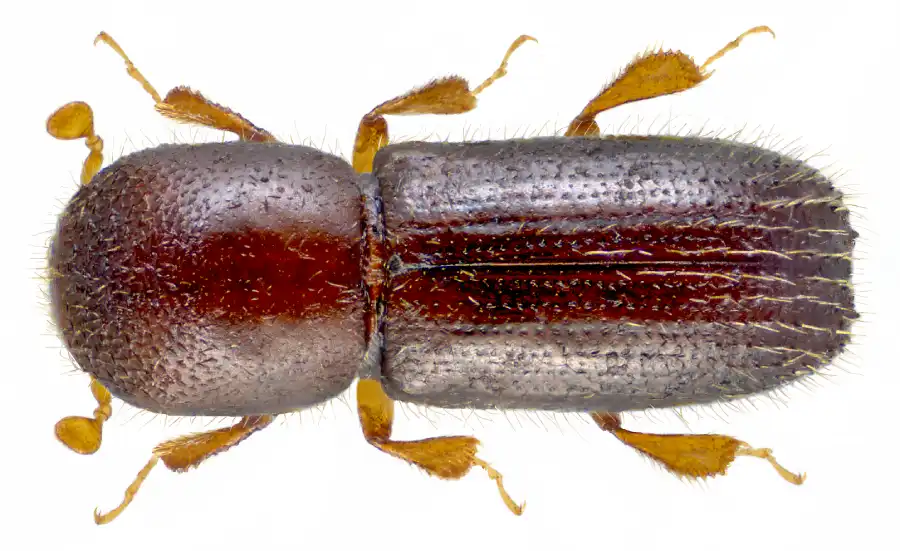
Here’s the knockout punch: most ambrosia beetles—like redbay or the granulate ambrosia beetle (Xylosandrus crassiusculus)—target dead or dying trees. They’re nature’s cleanup crew, recycling logs and storm-snapped branches. Granulate hits stressed hardwoods—maples, dogwoods—but rarely healthy ones. In Florida, it’s a nuisance post-hurricanes, not a daily terror. Our borer? It doesn’t care if a tree’s thriving. It barges into live oaks in LA, figs in Cape Town, even Knysna’s Virgilia post-2019—green and growing, till the fungus says otherwise. That’s rare for ambrosia beetles—most stick to the weak, but “polyphagous” means no rules. It’s like a thief hitting mansions, not just abandoned shacks.
Fun tidbit: some ambrosia beetles—like Xyleborinus saxesenii—brew alcohol in their tunnels from fungal fermentation. Smells like a bar, attracts more beetles. Our borer skips the booze—straight fungal feast, no frills. It’s all business, and that focus pays off in sheer havoc.
Why It’s the Champ
So, beetle vs. beetle—who wins? Redbay’s a sniper—deadly but narrow. Tea borers and coffee pests are specialists—good at one gig, not all. Termites are a different league—no fungal flair. The polyphagous shot hole borer’s the all-rounder: 200+ trees, turbo breeding, healthy targets, and a fungal partner that lingers like bad news. In South Africa, it’s hit eight provinces since 2017; redbay’s stuck to US coasts. Coffee borers ruin beans, not forests. Our beetle’s polyphagous scope, “fornicatus” speed, and human boost—crates, cities, climate—make it a champ of chaos.
The beetle’s polyphagous scope, “fornicatus” speed, and human boost—crates, cities, climate—make it a champ of chaos.
Picture it: a Knysna oak falls while a tea estate hums along fine. That’s the difference—our borer’s not just a pest; it’s a plague with wings. It’s the black sheep that outshined the family, turning a quiet ambrosia gig into a global takeover. Tip your hat—it’s beetle royalty, and we’re still counting the trees it’s crowned.
At ConSarca, our goal is to break down the complex story of the polyphagous shot hole borer into bite-sized, easy-to-grasp pieces. We’re here to help you see past the beetle’s tiny tunnels and understand the real threat—the fungus it carries. More than that, we want to arm you with the know-how to spot an infestation early, shield your healthy trees from this sneaky duo, and even nurse infected ones back to health without reaching for the chainsaw. Whether you’re a homeowner, a gardener, or just someone who loves trees, we’re your go-to resource for tackling this pest the smart way—because knowing the full story is the first step to fighting back.