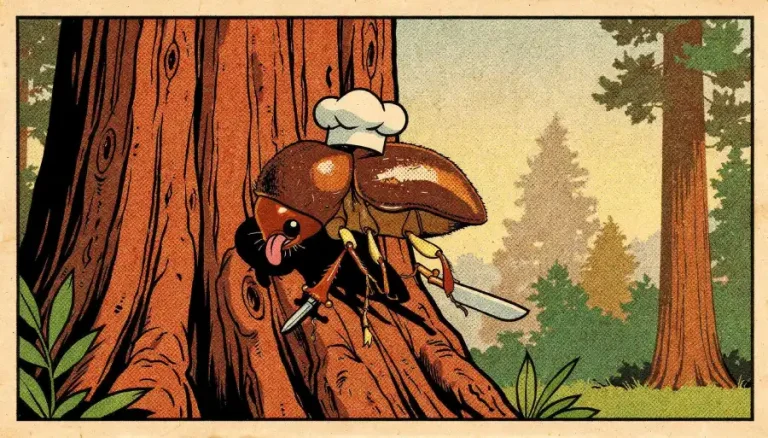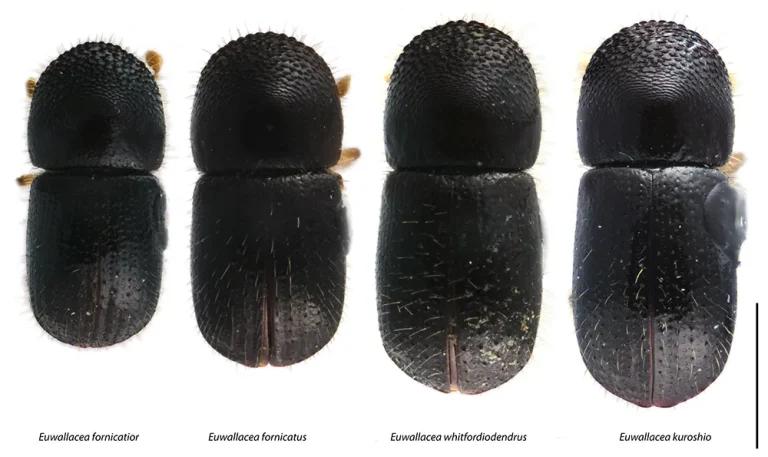
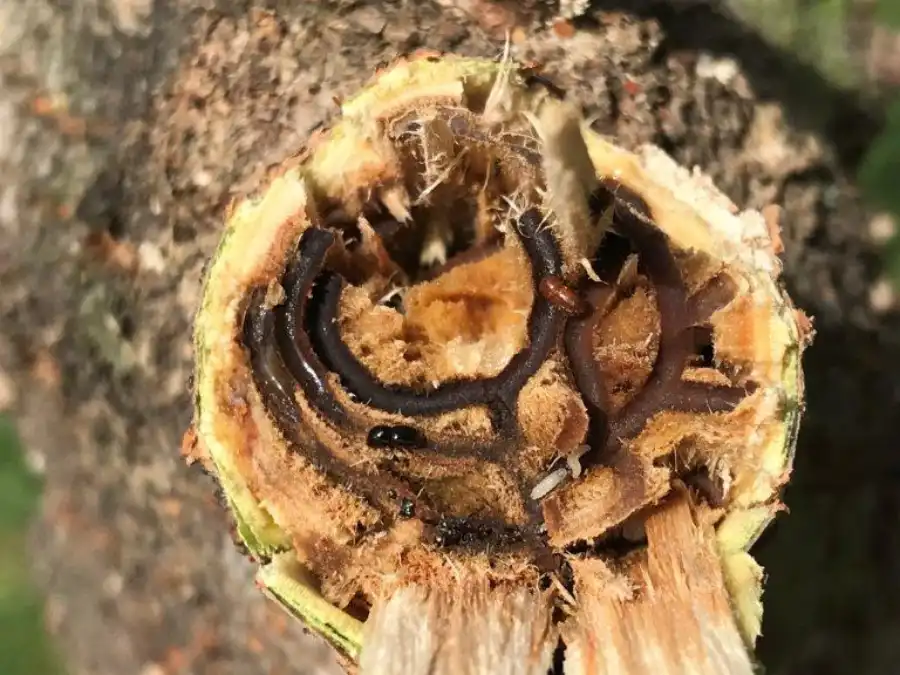
By now, you’ve probably got the polyphagous shot hole borer on your radar—that tiny beetle with a fungal sidekick and a love life that’d make a soap opera blush. We’ve already spilled the tea on how it teams up with fungi to take down trees and how its “fornicatus” mating habits turbocharge its invasions. But there’s one more piece of its name we haven’t cracked open yet: “polyphagous.” It’s a mouthful, right? Sounds like something a scientist dreamed up to sound smart. Well, it’s not just jargon—it’s a clue as to why this beetle’s such a headache from California to South Africa.
In this third instalment, we’re peeling back the curtain on “polyphagous” and what it says about our little invader’s appetite. Spoiler: it’s not eating what you think, but it’s still chowing down on the world, one tree at a time.
Weird Words, Big Meanings
Science loves a good word: mashup. Take “dinosaur”—it’s Greek for “terrible lizard,” which fits those Jurassic giants perfectly. Or “rhinoceros,” meaning “nose horn,” because, well, just look at one. These names aren’t random; they’re like secret codes that tell you something about the critter. The polyphagous shot hole borer’s name is no different. It’s packed with oddball terms like “Euwallacea” (named after some beetle-loving scientist, probably), “fornicatus” (Latin for “fornicator,” as we’ve covered), and, of course, “polyphagous.” At first glance, it’s a tongue-twister that sounds like it belongs in a spelling bee, not a backyard. But crack it open, and it’s a neon sign pointing to how this beetle operates. Every syllable in science has a story, and “polyphagous” is about to spill its guts.
Breaking Down “Polyphagous”: Many Meals, One Mission
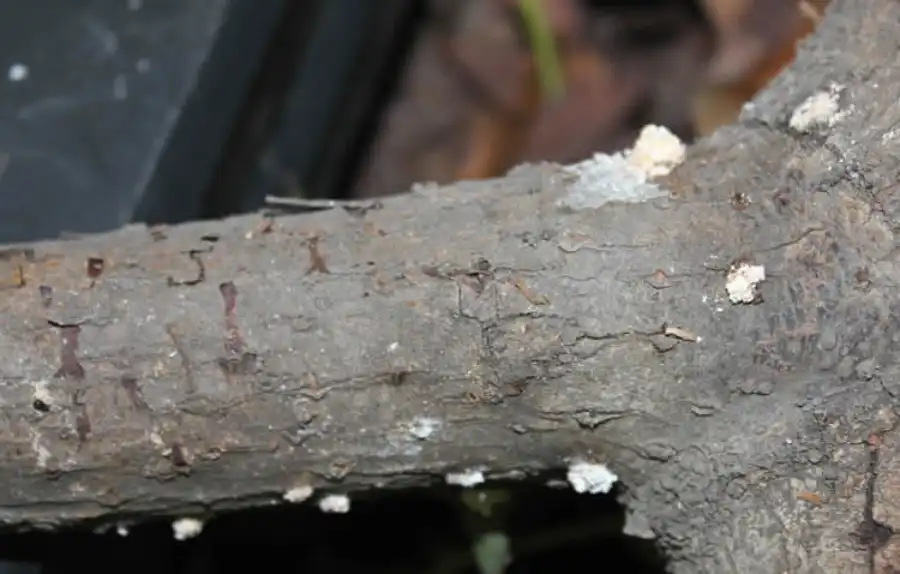
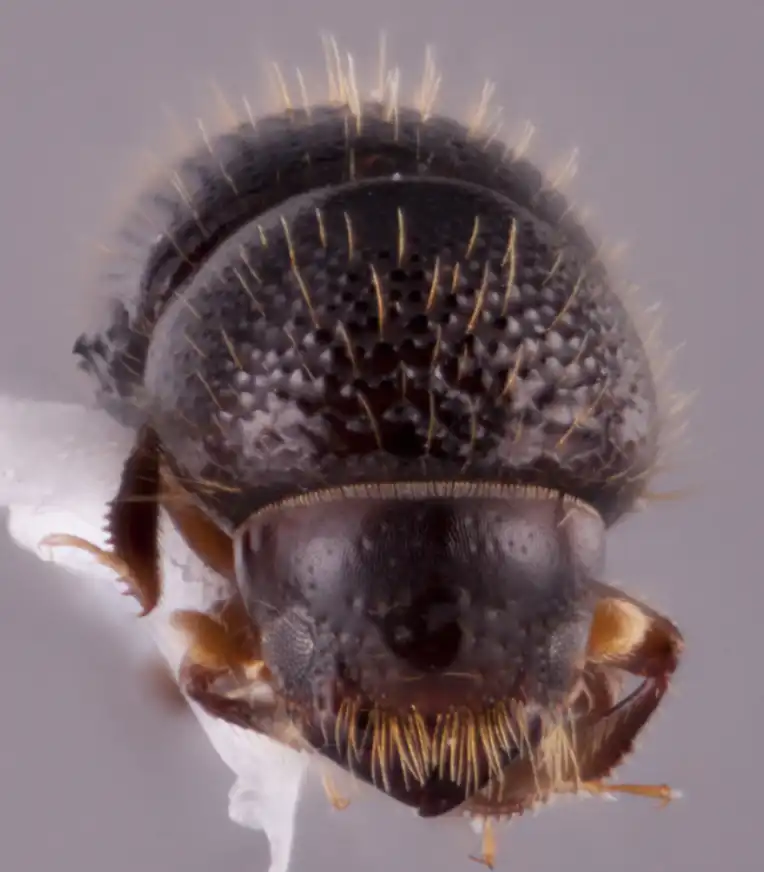
So, what’s “polyphagous” all about? Let’s split it up. It’s got two Greek roots: “poly,” meaning “many,” and “phagous,” from “phagein,” meaning “to eat.” Put them together, and you’ve got “eats many things.” Sounds like this beetle’s a buffet-line champ, right? Well, not exactly—it’s not scarfing down pizza and tacos. In biology, “polyphagous” means an organism that feeds on a wide variety of stuff, and for our shot hole borer, that “stuff” is trees. Over 200 species, to be precise. Oaks, maples, avocados, sycamores—you name it, this beetle’s probably drilled into it. That’s the first layer: it’s not picky about its targets, and that broad appetite is why it’s popping up everywhere, from urban parks to farmland.
But here’s the twist: it’s not eating the trees themselves. Remember that fungal partner we talked about? The beetle—technically an ambrosia beetle—bores into the wood to farm Fusarium euwallaceae, a fungus it carries in little pockets on its body. It’s the fungus that does the chowing, spreading through the tree’s water pipes and munching on its tissues. The beetle nibbles on the fungus, not the wood. So, “polyphagous” isn’t about the beetle eating tons of tree types—it’s about setting up shop in tons of them. It’s a farmer with a green thumb for fungi, and its menu of host trees is what makes it a standout. Fun fact: some bug nerds argue it’s not truly polyphagous since it’s the fungus doing the eating, but the name sticks because of all those trees it hits.
A Smorgasbord of Trouble
This wide-ranging taste is a big deal. Most ambrosia beetles stick to a few tree species—maybe a handful of dead logs or sickly trunks they can quietly farm in. Not this guy. The polyphagous shot hole borer barges into healthy trees like it owns the place, from fruit orchards to shade-giving giants. In California alone, it’s been spotted in over 60 tree species, and globally, that list tops 200. That’s like a kid who’ll eat anything from broccoli to ice cream—except this kid’s trashing your backyard. Avocado growers hate it because it threatens their crops. City planners curse it because it kills off-street trees. Even your neighbour’s prized peach tree isn’t safe. Its “polyphagous” nature means nowhere’s off-limits, and that’s a massive headache for anyone with roots in the ground.
In South Africa, it’s taken out historic trees planted centuries ago.
Here’s a quirky titbit: in Israel, they found it munching on carob trees, which are tough as nails—proof this beetle doesn’t mess around. And in South Africa, it’s taken out historic trees planted centuries ago. It’s not just about quantity; it’s about versatility. Whether the tree’s a native or an import, thriving or limping along, the shot hole borer says, “Good enough,” and moves in with its fungal crew.
Learn More
View our YouTube Channel and learn more about the Polyphagous Shot-Hole Borer
Why “Polyphagous” Spells Success
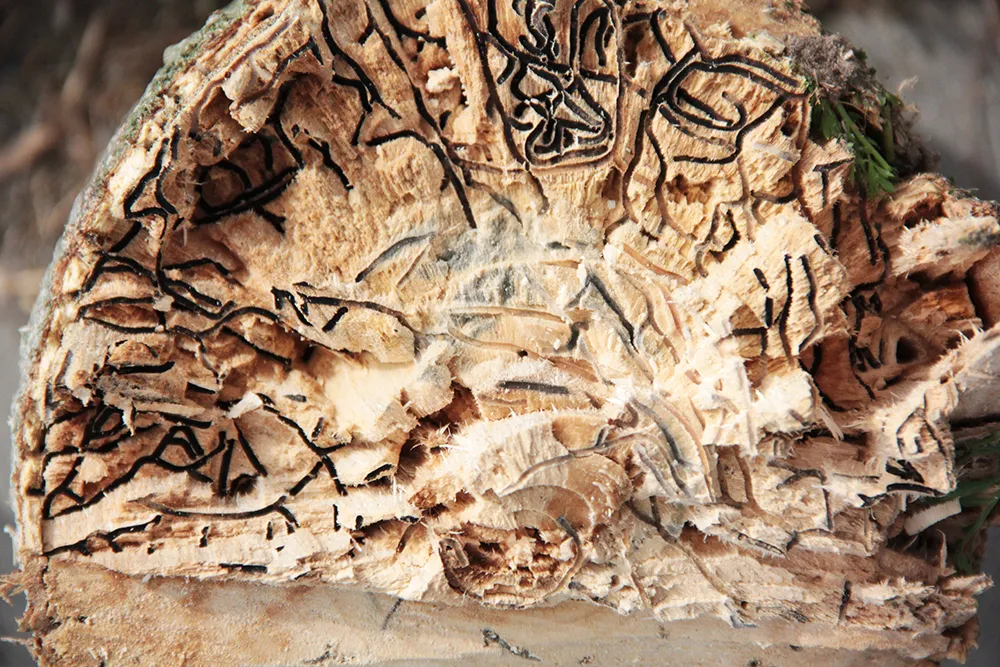
This eat-anywhere attitude is a huge reason the beetle’s winning the invasion game. A picky pest might struggle to find the right tree in a new place, but not this one. Land in a new country via a shipping crate? No problem—there’s always a tree it can call home. Pair that with its “fornicatus” breeding frenzy—one queen mating with her sons to spawn an army—and you’ve got a recipe for chaos.
With climate change warming things up and global trade shuffling wood around, its buffet keeps growing.
Sure, the fungus kills the tree, but “polyphagous” is why the beetle keeps finding new victims to infect. It’s like a door-to-door salesman who doesn’t care what’s on your porch—just that you’ve got one. And with climate change warming things up and global trade shuffling wood around, its buffet keeps growing.
The Name Says It All
So, “polyphagous” isn’t just a fancy label—it’s the beetle’s battle cry. It’s not about gobbling up wood; it’s about hitting tree after tree with its fungal partner, turning a single invader into a forest-wide plague. That big word tells you this isn’t a one-trick bug—it’s a jack-of-all-trades with a knack for crashing every party. Next time you spot those shot holes, don’t just blame the beetle or its fungus. Tip your hat to “polyphagous”—the reason this tiny terror’s menu is way too big to handle.
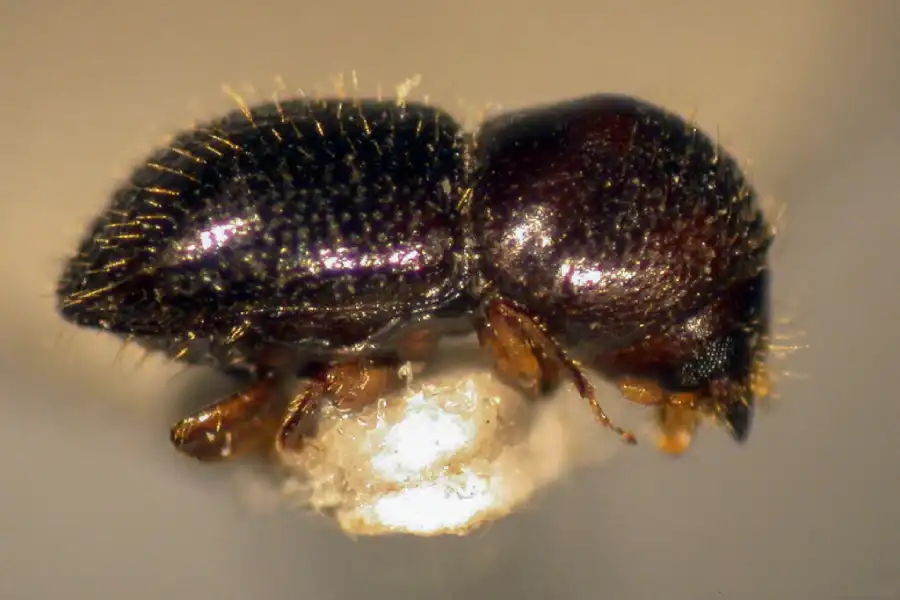
At ConSarca, our goal is to break down the complex story of the polyphagous shot hole borer into bite-sized, easy-to-grasp pieces. We’re here to help you see past the beetle’s tiny tunnels and understand the real threat—the fungus it carries. More than that, we want to arm you with the know-how to spot an infestation early, shield your healthy trees from this sneaky duo, and even nurse infected ones back to health without reaching for the chainsaw. Whether you’re a homeowner, a gardener, or just someone who loves trees, we’re your go-to resource for tackling this pest the smart way—because knowing the full story is the first step to fighting back.